Restaurant social media: from filming to the feed
A good dish catches attention. But a restaurant has much more to show: its people, atmosphere, care in the kitchen and experience at the table. Social media management turns that everyday reality into content that helps someone decide to visit.
An on-site shoot goes further with a plan: what to show, who it is for, which format to use and what the content should achieve.
Plan before switching on the camera
Before filming, understand the restaurant's priorities: key dishes, quieter days, lunch or dinner service, reservations and upcoming occasions. The goal might be to introduce a menu, show the space or explain a particular experience. Each goal calls for different content.
Prepare a shot list and agree timings with the team. Filming during peak service without preparation can disrupt the operation and limit what you capture. Allow time for dishes, interiors and preparation, while respecting the privacy of the people present.
Give every photograph and clip a purpose
A content session does not have to produce just one video. The same dish can become a preparation reel, a feed photograph and short story clips. Plan that variety before the shoot instead of trying to invent it during editing.
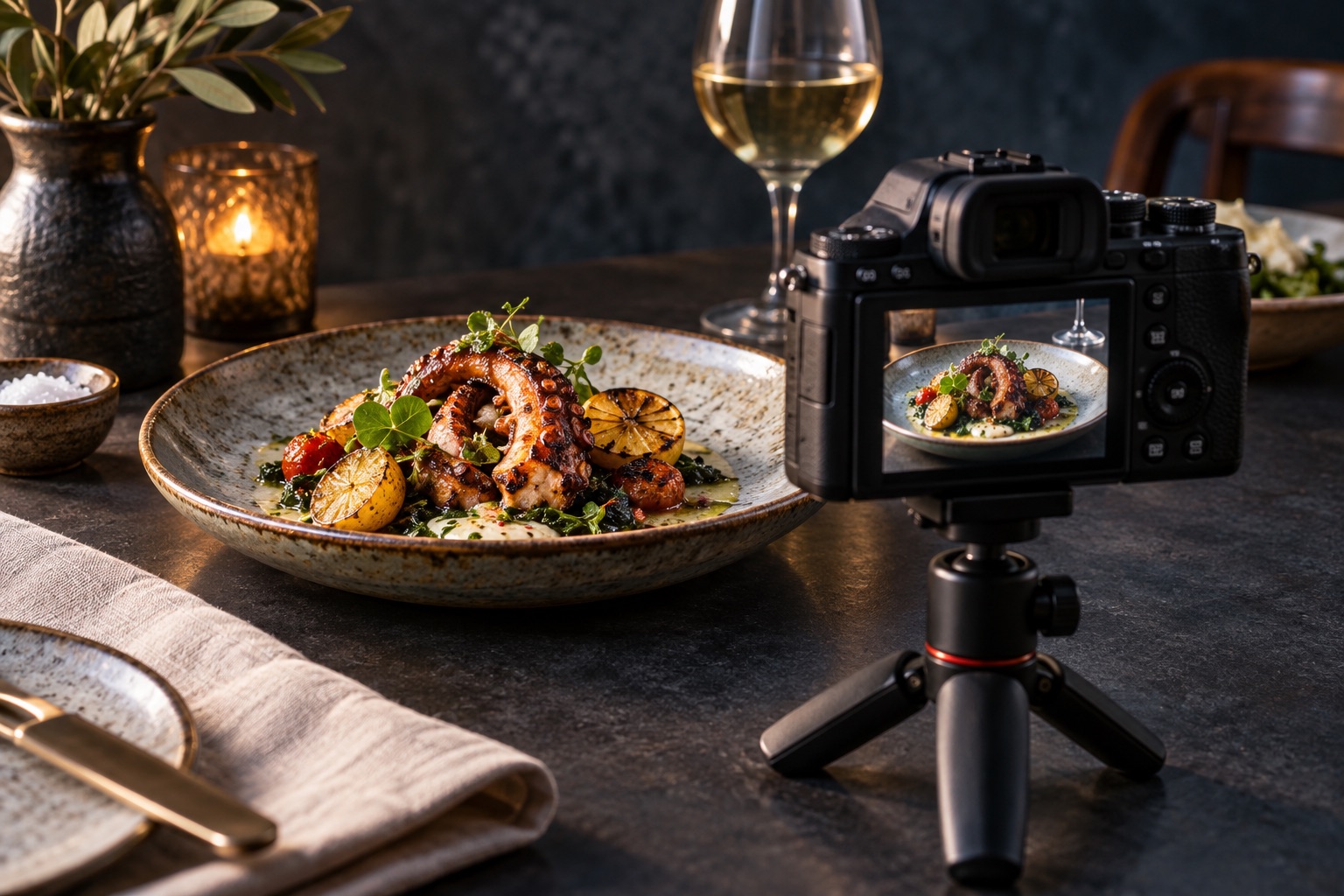
Capture wide shots to introduce the space, close-ups for texture and movement, and details that make the restaurant recognisable. Keep the food faithful to what guests will be served. Heavily altered imagery can create expectations the real experience cannot meet.
- The space and atmosphere, before the food arrives.
- Preparation and plating, with attention to detail.
- The team and their hospitality, when they want to take part.
- Practical information: location, opening times and how to book.
Reels, photographs and stories do different jobs
A reel can communicate movement and atmosphere. A photograph can highlight a dish. A sequence of stories can answer a practical question. There is no need to force every message into the same format. Choose based on the message and the restaurant's production capacity.
In the edit, make the subject clear early on and add captions where speech is important to understanding it. Covers, colours and typography should work with the brand identity. Branding does not stop at the logo; it also shapes how the restaurant presents its content.
Build a calendar around the restaurant
Base your calendar on the way the business actually operates. Menu changes, special dates and team availability affect what you can publish. Alternating between experience, food and practical information stops the feed becoming a string of promotions.
As a starting point, spread discovery content, dish introductions and answers to common questions across the month. Adjust to the resources available. No posting frequency guarantees reservations on its own. Consistency needs to be sustainable.
Review the month with context
Separate visibility from commercial outcomes. Views, reach and interactions help explain how content circulates. Relevant messages, enquiries and recorded reservations help explain its impact on the business. A view is not the same as a guest at a table.
Compare equivalent periods and account for paid campaigns, holidays, seasonality and changes in posting frequency. In SJ Media's portfolio, the Sabores da Irene project includes example reels and supplied reporting panels covering one month. Those totals include different content formats and should not be attributed exclusively to three videos.
The review should lead to a decision: which subjects to develop, which questions to answer and which shots to capture on the next visit. That connection between planning, production and analysis gives social media management continuity.
Frequently asked questions
Do we need to film at the restaurant every day?
No. A planned shoot can provide material for several pieces of content. The frequency depends on menu changes, your strategy and the need to capture current moments. Spontaneous stories can complement planned production.
Does social media management include paid advertising?
That depends on the agreed scope. Planning, filming, editing, publishing and advertising are separate tasks. Confirm what is included and whether the advertising budget is separate from the management fee.
Put it into practice.
We help turn these ideas into websites, content and campaigns that work for your business.
Explore our social media management service See our work for Sabores da Irene Get in touch